
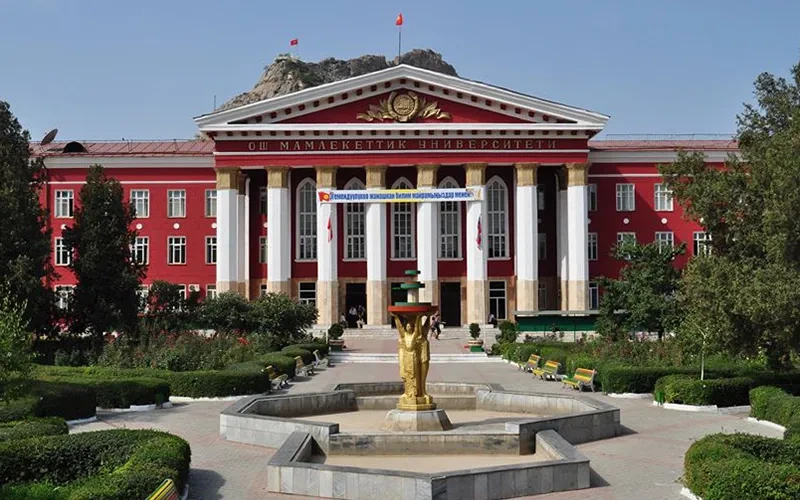
Osh state university is a public university in Osh, a city in southern Kyrgyzstan. It offers an English-medium MBBS programme, and Indian students can apply if they have qualified NEET. That is the short answer. The longer answer matters more, because choosing a medical university abroad is not only about fees or location. It is about whether your degree will let you practise in India when you come back.
This guide explains how MBBS at Osh state university works for Indian students: who can apply, how long the course is, what the NMC rules mean for you, what the costs include, and what daily life in Osh is like. By the end, you should be able to judge whether it is the right fit for you and your family.
Osh state university MBBS at a Glance
- Location: Osh, southern Kyrgyzstan
- Type: Public university
- Course: MBBS (General Medicine)
- Medium of teaching: English
- Duration: About 5 years of study plus 1 year of internship
- Entry requirement for Indians: NEET qualification and 12th with Physics, Chemistry, Biology
- Degree use in India: Possible, if you meet NMC rules and clear the licensing exam
Osh is one of the biggest cities in Kyrgyzstan and has been an educational centre in the region for decades. The medical programme at Osh state medical university draws students from India, Pakistan, Nepal, Sri Lanka and several other countries, so you will study in a mixed, international batch.
Why Indian Students Look at Osh state university
Most families who explore Osh state university have the same starting point. The NEET score is good enough to qualify, but not good enough for a government seat, and private colleges in India cost far more than the family can manage. Studying medicine abroad becomes a real option at that point.
A few things make Osh a common choice:
- Lower overall cost compared with most private medical colleges in India.
- English-medium MBBS, so you do not have to learn a new language before you start classes.
- A public university setting with an established medical faculty and teaching hospitals.
- A large Indian student community, which helps new students settle in.
- Simple admission, with no separate entrance exam apart from NEET.
These are reasons to shortlist the university. They are not reasons to stop researching. The sections below cover what you should check before you decide.
Eligibility for Osh state medical university MBBS
Indian students need to meet these requirements:
- NEET qualification. NMC rules say Indian students who want to practise in India after a foreign MBBS must have qualified NEET. This applies to the year you take admission. You do not need a high rank, only the qualifying score for your category.
- 12th pass with PCB. You should have studied Physics, Chemistry and Biology (with English) in Class 12. Universities usually look for around 50% marks in these subjects for the general category, and slightly less for reserved categories.
- Minimum age of 17 years on or before 31 December of the admission year.
- Valid passport. Apply early if you do not have one, because document processing can take time.
If you did not qualify NEET, do not rely on offers that promise admission without it. A degree earned that way cannot be used to register as a doctor in India.
Course Structure and Duration
The MBBS programme at Osh state medical university follows the usual pattern of medical training, but the exact subject order can differ from India. In simple terms, it runs in three phases.
Pre-clinical years. The first two years cover subjects like anatomy, physiology and biochemistry. This is classroom and laboratory work, and it builds the base for everything that follows.
Para-clinical years. Here you study pathology, pharmacology, microbiology and forensic medicine. You start connecting the science with disease and treatment.
Clinical years. The last years of study are spent in hospitals. You rotate through medicine, surgery, paediatrics, obstetrics and gynaecology and other departments. You learn to take histories, examine patients and assist doctors.
After the academic course comes a one-year internship. Under Indian rules, this internship must be completed at the same institution where you studied. Many students take it as part of the six-year timeline.
A note on language: classes are in English, but patients in hospitals mostly speak Russian or Kyrgyz. Students who learn basic Russian in the first years find clinical rotations much easier.
NMC Rules You Must Understand Before Applying

This is the most important section of this guide. Many students ask whether a university is "NMC approved". The truth is that the NMC does not approve or list foreign universities. What it does is set conditions that a foreign MBBS degree must meet if the graduate wants to practise in India. These come from the Foreign Medical Graduate Licentiate (FMGL) Regulations, 2021, which came into force on 18 November 2021.
The main conditions are:
- Minimum 54 months of medical study. Courses shorter than this are not accepted.
- Minimum 12 months of internship, and it counts separately from the 54 months.
- Same institution for course and internship. You cannot study at one university and intern at another, or intern in a different country.
- Training in the same country that awards the degree.
- English as the medium of instruction.
- A curriculum that matches Indian MBBS subjects listed in the regulations.
- NEET qualification before taking admission.
After returning to India, graduates must clear the licensing exam for foreign medical graduates (currently FMGE) and complete a further supervised internship before getting full registration. Plan for this stage from the start, because FMGE preparation is where many students struggle. Choose a university that gives strong clinical exposure, and start revising Indian-pattern subjects early.
What Does MBBS at Osh state university Cost?
Fees are the first thing most parents ask about, and also the hardest thing to answer in one number. Tuition is revised from time to time, and different sources quote different figures. Instead of repeating numbers that may be out of date, it is better to understand what makes up the total cost:
- Tuition fee for each academic year. This is usually the largest part.
- Hostel and accommodation, charged yearly or monthly depending on the arrangement.
- Food and daily living. Indian mess options are common in student areas.
- Medical insurance and health checks.
- Visa and residence permit renewals each year.
- Air tickets, usually one or two return trips per year.
- Exam preparation costs for FMGE after you return.
When you compare costs between universities, ask for the full six-year figure with every item above included. Some offers look cheap in year one and become expensive later. Also ask what is included in the fee package and what is paid separately. Because tuition changes, get the current fee sheet in writing before you pay any advance.
Admission Process Step by Step
The process is not complicated, but it moves faster if you prepare documents in advance.
- Check your NEET result and confirm you meet the eligibility criteria.
- Shortlist the university after comparing course length, fees, hostel facilities and clinical training.
- Submit your application with scanned copies of your documents.
- Receive the admission letter (and the invitation letter needed for the student visa).
- Pay the first-year fees as shown in the official fee structure.
- Apply for the student visa with your invitation letter and passport.
- Book your flight and arrange accommodation before you travel.
- Reach Osh and complete registration, medical checks and your residence formalities.
Documents Usually Needed
- Passport (valid for at least 18 months is a safe target)
- Class 10 and Class 12 mark sheets and certificates
- NEET scorecard
- Birth certificate
- Passport-size photographs
- Medical fitness certificate and other health reports asked by the university
Students who want help comparing universities, preparing documents or understanding the admission steps can get guidance from North Western Education Services. Having someone walk you through the sequence, especially for first-time families, can save a lot of back and forth.
Life in Osh: Hostel, Food and Climate

Osh sits in the Fergana Valley area of Kyrgyzstan, with mountains nearby. Summers are hot and winters are cold, so you will need proper winter clothing from your first year.
Hostel. Most first-year international students stay in university hostels or student housing. Rooms are usually shared. Some students move to private apartments in later years, often with batchmates.
Food. Indian students are used to cooking for themselves or joining mess groups, and Indian groceries and spices are available in the city. Local food leans on bread, meat, rice dishes and dairy, so vegetarian students should plan ahead.
Safety and daily life. Osh is a lively city with markets, cafés and a strong student presence. As in any foreign city, students are advised to stay in groups at night, keep copies of their documents and know the location of their embassy contact.
Missing home. The first semester is usually the hardest. Staying in touch with seniors from India, who understand the same food, language and exam worries, helps a lot.
After MBBS: Coming Back to Practise in India
Your path after graduation looks like this:
- Finish the MBBS course and the 12-month internship at the same institution.
- Receive your degree and make sure your documents are complete.
- Clear the licensing exam for foreign medical graduates in India.
- Complete the supervised internship required in India.
- Get registration from a State Medical Council.
Then you can start practising or apply for postgraduate options. The key point is that the degree opens the door, but your preparation decides how smoothly you walk through it. Students who treat the six years as training for the Indian licensing exam, not only the university exams, usually have an easier return.
Is Osh state university Right for You?
It may suit you if you have qualified NEET, want an English-medium course, have a limited budget and are comfortable living in a smaller, quieter city far from home. It may be less suitable if you want a big-city lifestyle or if you cannot manage the cold winters and the distance.
Before you decide, ask the university or your counsellor these questions:
- Is the full course length at least 54 months of study plus 12 months of internship?
- Where will I do my clinical rotations and internship?
- What is the total six-year cost, with every item listed?
- How many Indian students are in the current batch, and can I speak to some?
- What support will I have for FMGE preparation?
Frequently Asked Questions
Is Osh state university good for MBBS?
Osh state medical university is a public institution with an English-medium MBBS programme that many Indian students choose for its lower cost and international batch. Whether it is good for you depends on your budget, your comfort with the location and how well you plan for the licensing exam in India.
Is NEET compulsory for MBBS at Osh state university?
Yes, for Indian students who want to practise in India. You need to qualify NEET before taking admission. A high rank is not required, only the qualifying score.
How many years is MBBS at Osh state university?
The programme has about five years of academic study and a one-year internship, so the total is around six years. This fits the NMC rule of at least 54 months of study plus 12 months of internship.
Can I do my internship in India after studying in Kyrgyzstan?
The first 12-month internship must be done at the same foreign institution where you studied. After returning, you complete a further supervised internship in India as part of the registration process.
Do I need to learn Russian?
Classes are taught in English, so you do not need Russian to begin. Basic Russian helps in hospitals, where many patients speak Russian or Kyrgyz.
What is the total cost of studying MBBS at Osh state university?
The total depends on current tuition, hostel, food, insurance, visa and travel costs over six years. Ask for the full multi-year figure in writing so there are no surprises later.
Is Osh a safe city for Indian students?
Most students live and study there without problems and form close groups with other international students. Normal precautions apply, such as avoiding late-night travel alone and keeping your documents safe.
Conclusion
An MBBS from Osh state medical university can be a practical route for NEET-qualified Indian students who want an English-medium medical degree at a manageable cost. The decision should rest on a few clear checks: the course must meet the 54 months plus 12 months internship rule, you must have qualified NEET, and you should know the full six-year cost before you commit.
Take your time, speak to current students if you can, and plan early for the licensing exam you will face in India. If you want help with university comparison, admission steps or documents, you can talk to the counsellors at North Western Education Services before you make your final choice.