
Every year, thousands of NEET-qualified Indian students look beyond domestic medical colleges because of limited seats and high private college fees. Kyrgyzstan has steadily become one of the go-to destinations for these students, and Osh State University is one of the names that comes up again and again in that search.
If you're a NEET-qualified student (or a parent researching on their behalf), you probably have a long list of questions: Is the degree valid in India? What's the eligibility criteria? What is student life actually like in Osh? This article walks through what you genuinely need to know before shortlisting Osh State University for your MBBS journey — without the exaggerated claims you'll find on a lot of consultancy websites.
A Quick Introduction to Osh State University

Osh State University is a public university located in Osh, the second-largest city in Kyrgyzstan, in the country's south. The university runs an International Medical Faculty that offers the General Medicine programme (commonly referred to as MBBS by Indian students) to international students, including a large number from India.
Because of this medical faculty, the university is often referred to informally as "Osh State Medical University," even though its official registered name remains Osh State University. This naming difference is worth knowing so you don't get confused when comparing information across different websites, brochures, or agents.
Osh itself is a smaller, more compact city than Bishkek (Kyrgyzstan's capital), which many students find easier to settle into — lower cost of living, a slower pace, and a growing community of Indian students who've studied there before you.
Why Indian Students Consider Osh State University for MBBS
There isn't one single reason students choose Osh — it's usually a combination of practical factors that make sense for a NEET-qualified student weighing options abroad.
English-Medium Instruction
The General Medicine programme for international students is taught in English, which removes one of the biggest hurdles Indian students face when considering universities in non-English-speaking countries. That said, most programmes also include some local language classes, since you'll need basic Kyrgyz or Russian to communicate with patients during clinical postings later in the course.
A Structured, NMC-Aligned Curriculum
The course duration typically follows the same pattern accepted by India's National Medical Commission (NMC) for MBBS-equivalent degrees abroad — a multi-year General Medicine programme followed by a mandatory internship period, in line with NMC's screening test requirements. This structure matters because it directly affects whether you'll be eligible to sit the Foreign Medical Graduate Examination (FMGE/NExT) after graduating.
Recognition Status
Osh State University's medical faculty is listed in the World Directory of Medical Schools (WDOMS), which is the reference database the NMC checks against when evaluating foreign medical degrees for Indian graduates. Being listed in WDOMS is a baseline requirement — it doesn't automatically guarantee a smooth licensing process, so it's still important to verify the university's current listing status and NMC guidelines directly before applying, since recognition requirements and government policies can be updated from time to time.
Comparatively Affordable Cost of Education
One of the most commonly cited reasons Indian families explore Kyrgyzstan for MBBS is affordability compared to private medical colleges in India. Exact tuition fees, hostel charges, and other costs vary depending on the academic year, currency exchange rates, and any updates the university makes to its fee structure. Rather than relying on a fixed number you might see quoted online, it's worth requesting the latest official fee breakdown directly from the university or a trusted admissions consultant before making a decision.
Clinical Exposure
Osh is a fairly densely populated region, and university-affiliated hospitals typically see a steady patient inflow. For students, this generally translates into more hands-on opportunities to observe cases and assist under supervision as they move into the clinical years of the programme — something that matters a lot when you're preparing for practical medical practice later on.
Eligibility Criteria for Indian Students

Before applying anywhere, it's essential to check whether you meet the basic eligibility bar set by the NMC for Indian students pursuing MBBS abroad. While individual universities may have their own additional requirements, the broadly applicable NMC criteria for MBBS abroad generally include:
- A valid NEET-UG qualifying score, usually accepted within a defined validity window (check the current NMC guidelines for the exact number of years)
- Completion of 10+2 with Physics, Chemistry, and Biology (PCB) from a recognised board
- A minimum aggregate of around 50% in PCB for general category candidates, with relaxed criteria for SC/ST/OBC and other reserved categories as per NMC norms
- A minimum age requirement, generally 17 years, by a specified cut-off date
These figures can be revised by the NMC from time to time, so always cross-check the latest eligibility notification on the NMC's official website or with a knowledgeable admissions counsellor before you apply.
Documents Typically Required for Admission
While the exact checklist can vary slightly by admission cycle, Indian students generally need to prepare the following documents when applying to universities like Osh State University:
- Passport (valid for the duration of the course, with sufficient validity remaining)
- 10th and 12th mark sheets and certificates
- NEET-UG scorecard
- Passport-size photographs
- Medical fitness certificate
- Migration and transfer certificates (if applicable)
Because document requirements can change based on both Indian and Kyrgyz regulations, it's a good idea to get a checklist verified against the current admission cycle rather than relying on an old list.
What Student Life Looks Like in Osh
For many first-time international students, moving to a new country is as much about adjusting to daily life as it is about academics. A few things Indian students commonly ask about:
Hostel accommodation: International students are usually housed in university-affiliated hostels or nearby accommodation arranged for foreign students. Facilities, room-sharing arrangements, and costs vary, so it's worth asking for specifics — including whether rooms are shared or private, and what's included — before you commit.
Food: Indian students often form informal groups to cook familiar food together, and larger student communities sometimes lead to small Indian eateries or grocery stores nearby. Don't assume identical availability to what you'd find in a bigger city like Bishkek, though — Osh is smaller and more regional.
Community and safety: A meaningful number of Indian students already study in Osh, which tends to make the transition smoother for new arrivals — from settling into hostel life to finding your footing in classes. As with any city abroad, it's sensible to follow standard safety precautions and stay in touch with your university's international student office.
Climate: Kyrgyzstan experiences a continental climate with cold winters and warm summers, which is a noticeable shift for students coming from most parts of India. Packing appropriately for winter is genuinely important here.
Osh State University vs Other MBBS Destinations in Kyrgyzstan
Kyrgyzstan has several universities offering MBBS-equivalent programmes for international students. Before choosing one, Indian students should compare the following factors:
- Recognition: Check whether the medical faculty is currently listed in WDOMS and whether the programme meets applicable NMC requirements.
- Course Structure: Compare the programme duration, curriculum, clinical training, and internship structure with current NMC/NExT requirements.
- City & Living Costs: Consider the cost of accommodation, food, transport, and daily expenses in the university’s city.
- Indian Student Community: Look at the size and availability of the Indian student community, including access to Indian food and familiar support networks.
- Fee Transparency: Check whether tuition, hostel, registration, and other charges are clearly mentioned in the official fee structure.
- Clinical Training: Compare affiliated hospitals, patient exposure, practical training, and the opportunities available during the clinical years.
- Student Support: Consider how the university supports international students with accommodation, documentation, academics, and day-to-day concerns.
- Overall Suitability: Instead of choosing based only on rankings or promotional claims, compare the university on recognition, academics, clinical exposure, costs, and student support before making a decision.
Rather than picking a university purely based on marketing claims, it helps to speak with a consultant who can walk you through official documentation for each option and clarify anything that seems unclear.
Career Path After MBBS from Osh State University
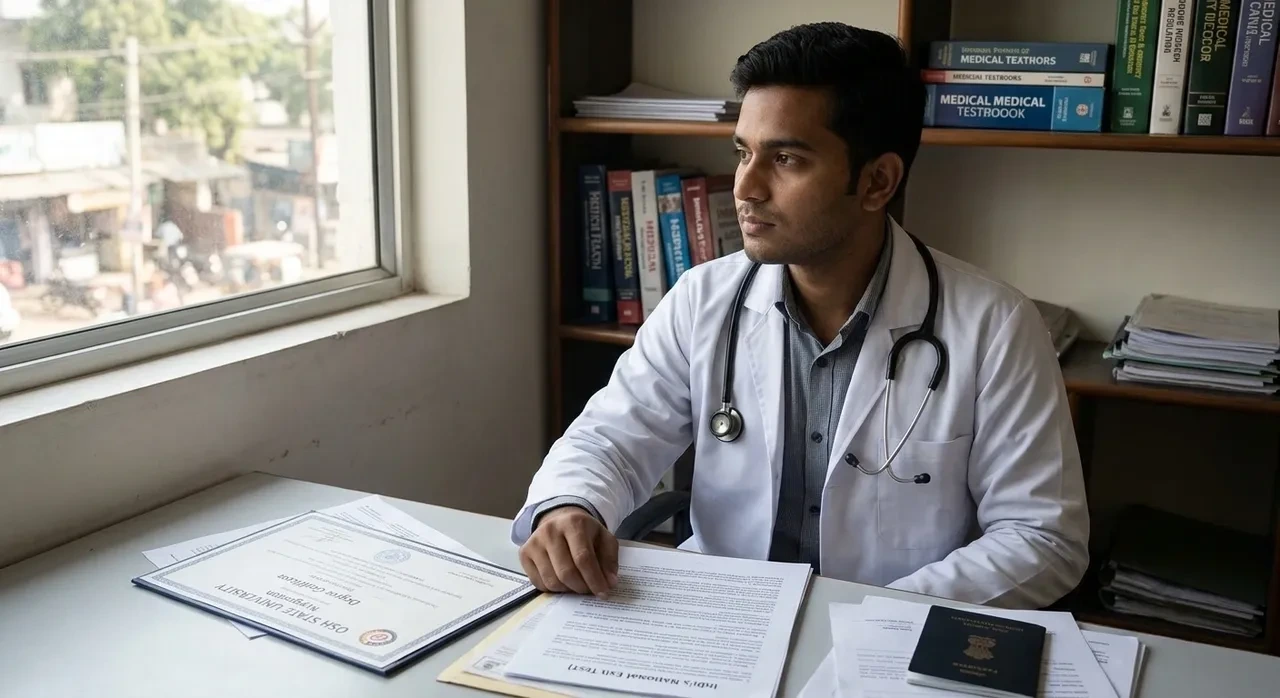
Once you complete your General Medicine degree and the required internship, the next major step for Indian students is typically the NMC's screening process (currently structured as NExT) to become eligible for medical practice in India. This is a standard requirement for all Indian students who complete a medical degree abroad, regardless of which country or university they studied at.
Beyond India, graduates whose degrees are recognised in the destination country's medical council or licensing body may also explore practice or further postgraduate study opportunities elsewhere, subject to that country's own regulations. Since licensing rules can change and vary significantly by country, it's important to research the specific requirements for wherever you eventually plan to practise, rather than assuming automatic eligibility everywhere.
How North Western Education Services Can Help
Researching a university, understanding shifting NMC guidelines, verifying document checklists, and comparing fee structures across multiple institutions can get overwhelming — especially when so much conflicting information is available online. This is where working with an experienced study-abroad consultancy can genuinely help.
North Western Education Services works with students exploring MBBS options in Kyrgyzstan, including at Osh state university, helping them understand admission requirements, prepare accurate documentation, and get clarity on the latest official policies before making a decision. If you're weighing Osh State University against other options, it's worth having a direct conversation to get your specific questions answered rather than relying solely on generic online information.
Frequently Asked Questions
Is Osh State University recognised for MBBS by Indian authorities? Osh State University's medical faculty is listed in the World Directory of Medical Schools, which is the database the NMC references when evaluating foreign medical degrees. However, recognition status and related NMC policies can be updated, so it's important to verify the current status directly with the NMC or a knowledgeable consultant before applying.
What is the minimum NEET score required for admission? There isn't a fixed minimum NEET score for admission to universities like Osh State University — the requirement is generally a qualifying NEET-UG score along with minimum PCB marks in your 12th grade, as per NMC eligibility norms. Always confirm current criteria before applying, as NMC guidelines can be revised.
Is English enough to study MBBS at Osh State University? The General Medicine programme for international students is taught in English. However, most programmes also include local language classes, since interacting with patients during clinical training later in the course typically requires basic Kyrgyz or Russian.
How long does the MBBS programme take to complete? MBBS-equivalent programmes abroad generally follow a multi-year academic structure followed by a mandatory internship period, aligned with NMC norms for foreign medical graduates. Exact duration should be confirmed with the university's current academic calendar.
Do I need to appear for FMGE or NExT after graduating from Osh State University? Yes. Like graduates of any foreign medical university, Indian students who complete their MBBS at Osh State University need to clear the NMC's screening process (currently structured as NExT) to be eligible to practise medicine in India.
Is Osh a safe city for international students? Osh is a regional city with an established international and Indian student community, which many students find helpful when settling in. As with studying in any new country, it's advisable to follow standard safety precautions and stay connected with your university's international student support office.
Conclusion
Choosing where to study MBBS abroad is a decision that deserves careful research rather than a quick sign-up based on brochure claims. Osh State University offers several genuine advantages for NEET-qualified Indian students — English-medium instruction, a structured curriculum aligned with NMC expectations, an established Indian student community, and generally more affordable costs compared to private colleges in India.
That said, recognition status, fee structures, and admission rules can change, so the smartest next step is to verify the latest official information before applying — either directly through the university or with the help of a consultancy that stays updated on current NMC and Kyrgyz regulations. If you'd like personalised guidance on whether Osh State University fits your specific NEET score, budget, and career goals, North Western Education Services can help you get clear, verified answers before you make your decision.


